
ROVE R2-4K Dual Pro review
Dual-channel dash cams now split into three rough tiers: cheap kits that give you basic evidence, mid-range models that balance usable video with decent apps, and premium setups that push night performance and rear-camera quality. The ROVE R2-4K Dual Pro sits in that upper-middle to premium edge, and the real question is simple: does it give you enough practical benefit over cheaper dual cams to justify the jump?
My short answer: yes, for buyers who care about stronger night footage, a better rear camera, and a bundle that includes the accessories many rivals make you add later. But if your main goal is just to have any front-and-rear record of an incident, you can spend less and give up less than ROVE would like you to think.
What makes this model different
On paper, the R2-4K Dual Pro has the right upgrades for a meaningful step up from a budget dual cam:
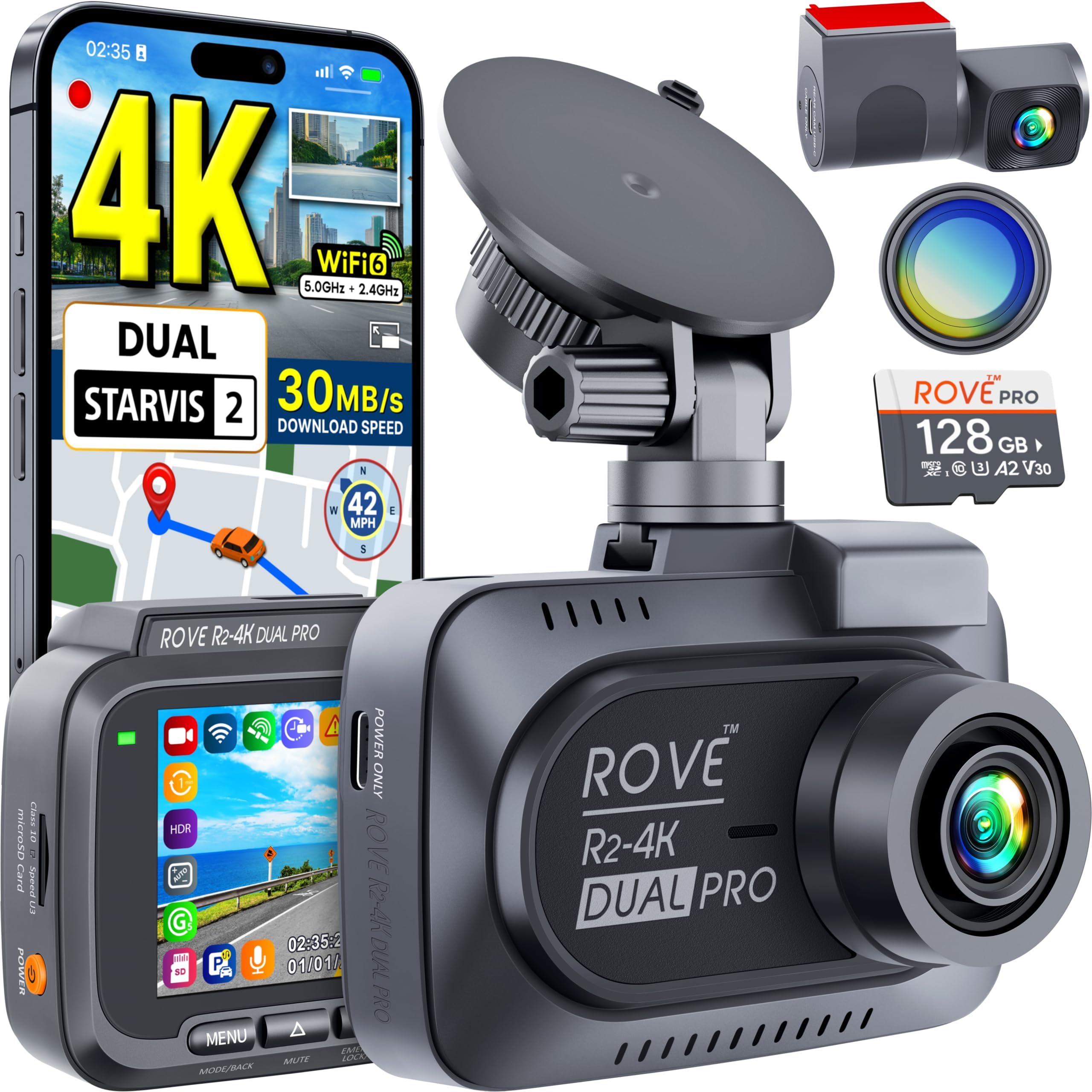
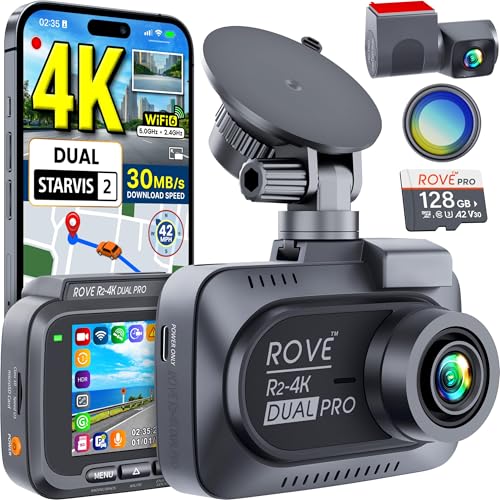
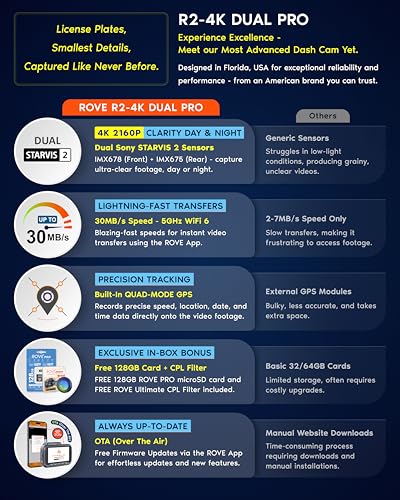
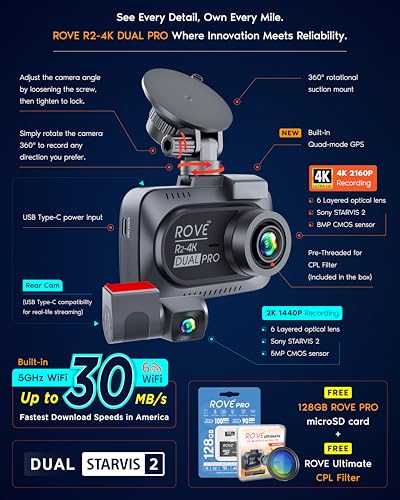
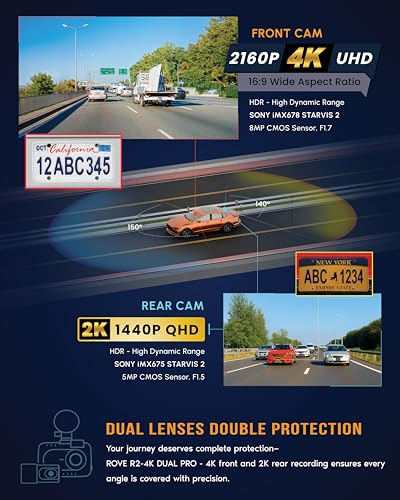
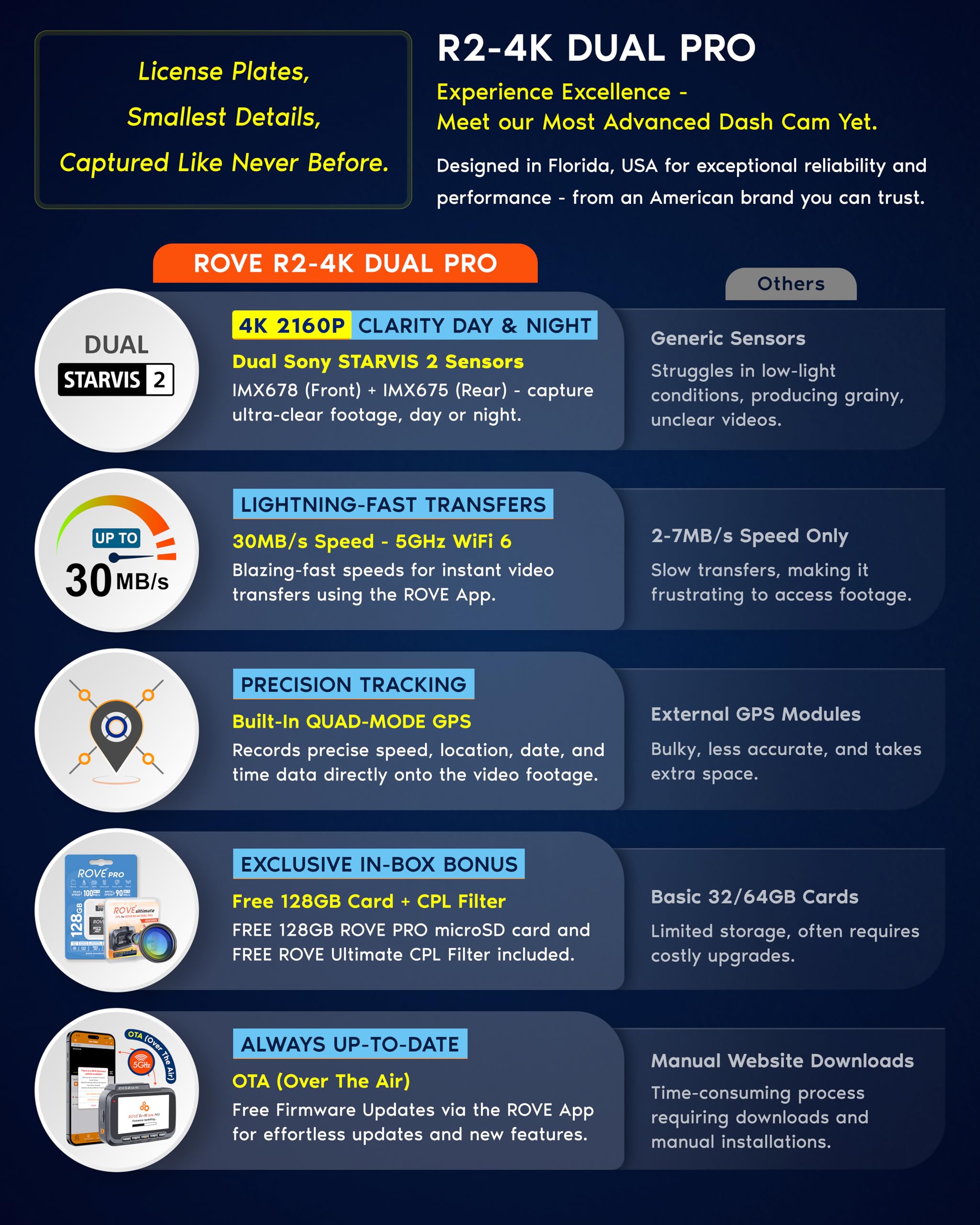
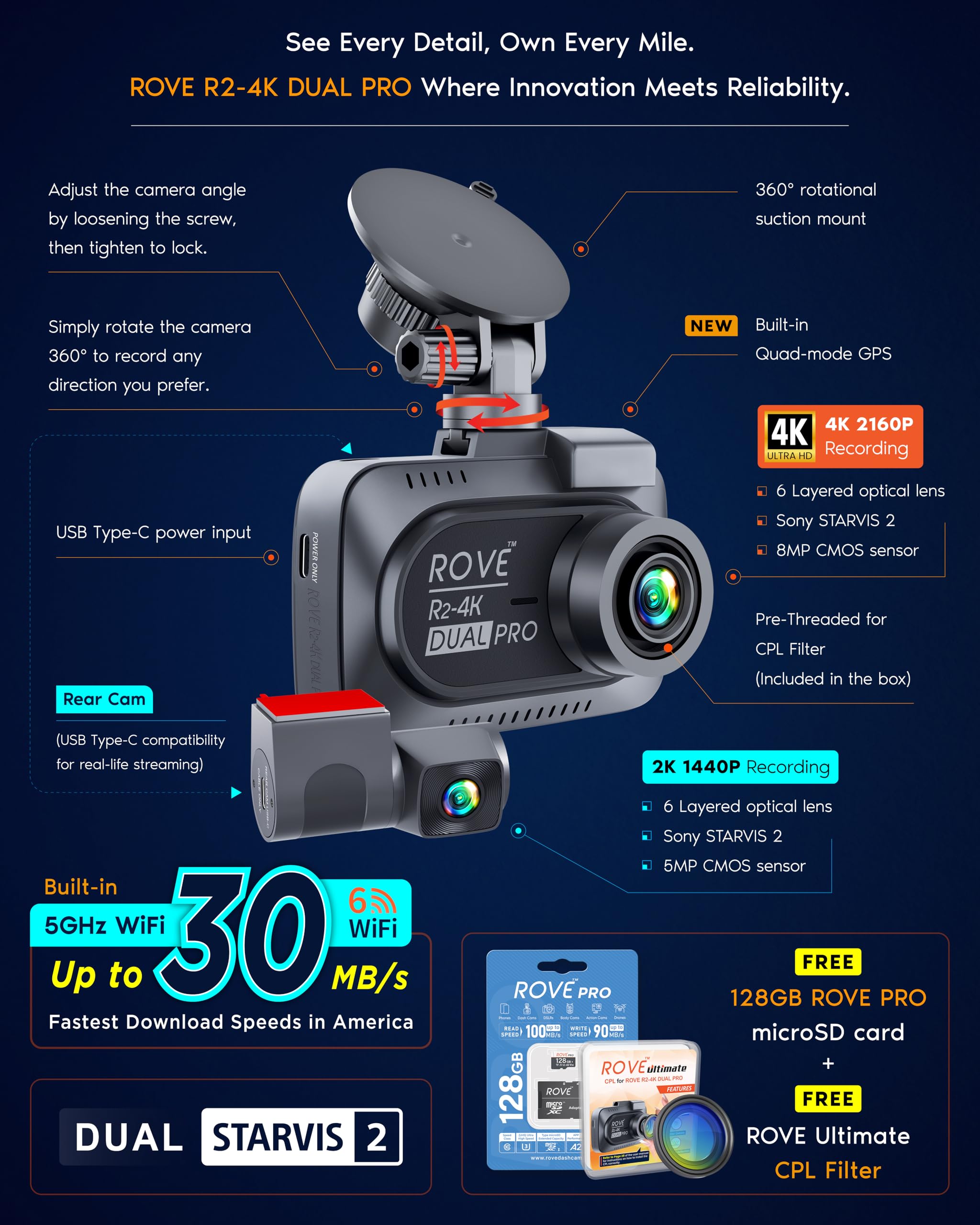
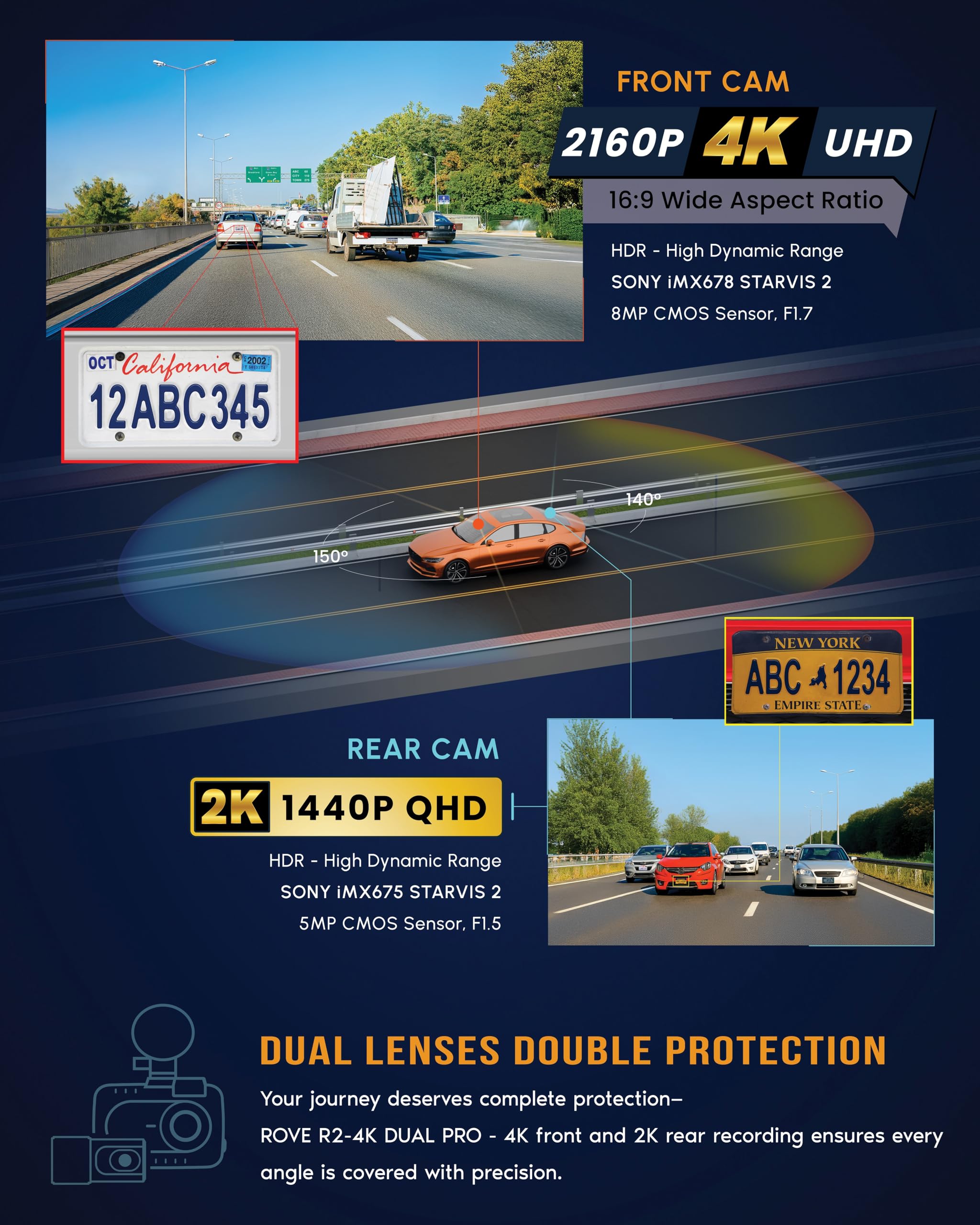
- 4K front and 2K rear recording means the rear camera is not an afterthought. In practice, that matters because rear footage is often where cheaper kits cut corners first. ROVE’s own lineup places the non-Pro Dual at 4K front plus 1080p rear, while the Dual Pro moves to 1440p rear and faster Wi‑Fi 6 transfers. (rovedashcam.com)
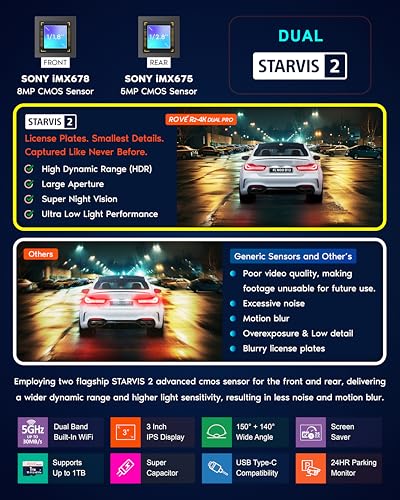
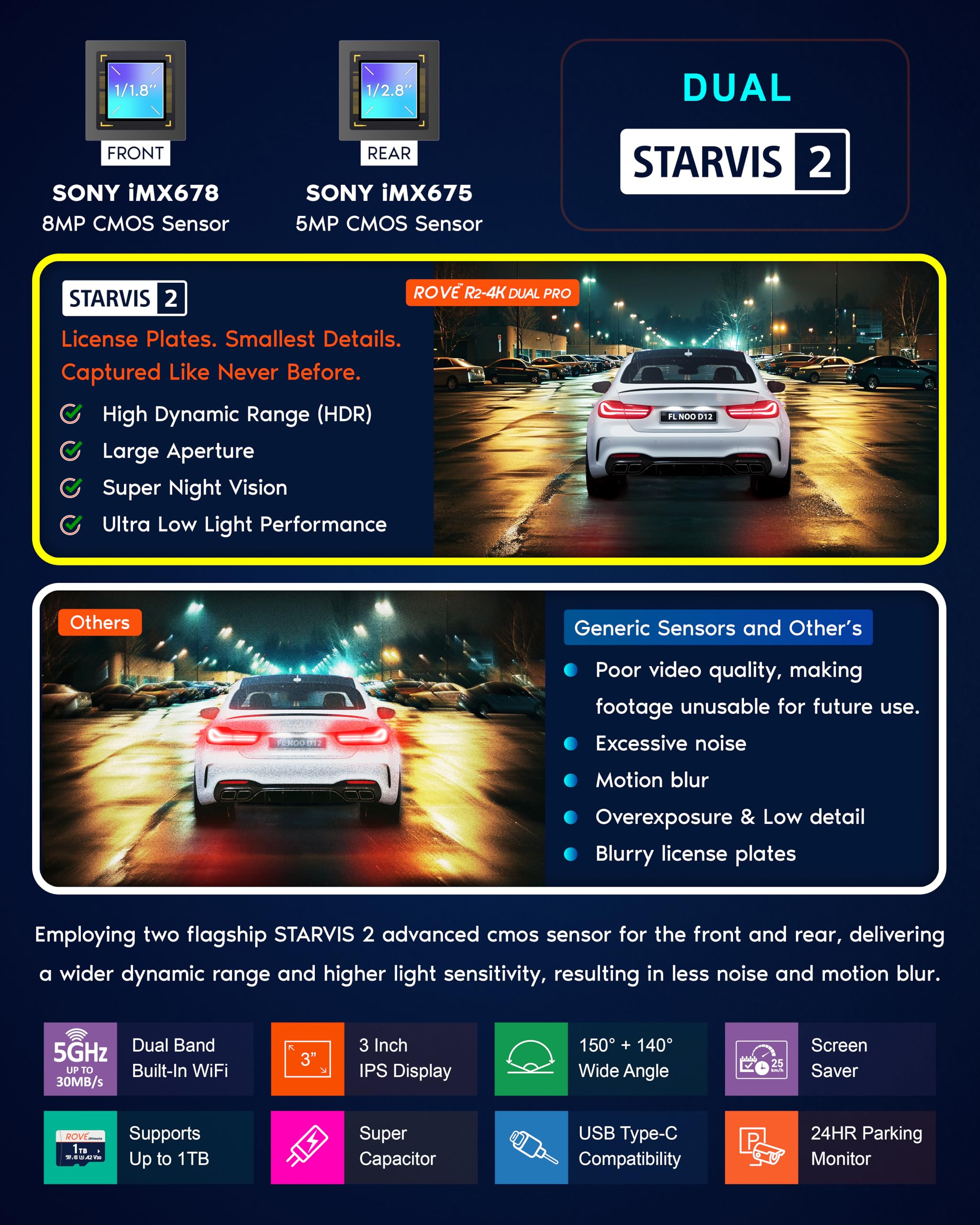
- Dual Sony STARVIS 2 sensors are the feature that actually matters most. Better sensors are what improve low-light detail, control glare, and reduce mushy night footage; the resolution numbers alone do not guarantee that. ROVE lists the front IMX678 and rear IMX675, and TechRadar’s review specifically praised the model for high-quality front and rear recording. (rovedashcam.com)
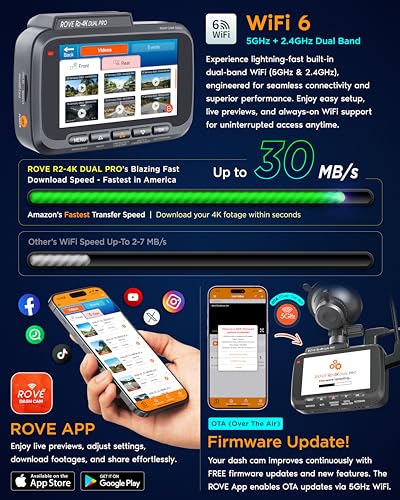
- Wi‑Fi 6 with claimed faster downloads is a convenience feature, not a safety feature. But it is still useful: if you actually pull clips to your phone often, faster transfer makes you more likely to use the camera rather than procrastinate until you need footage urgently. ROVE positions the Dual Pro at up to 30MB/s versus up to 20Mbps on the non-Pro Dual in its current product lineup. (rovedashcam.com)
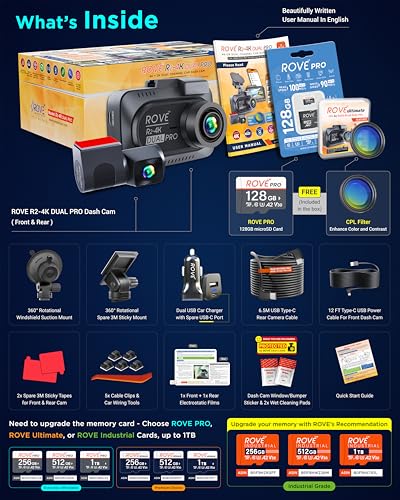
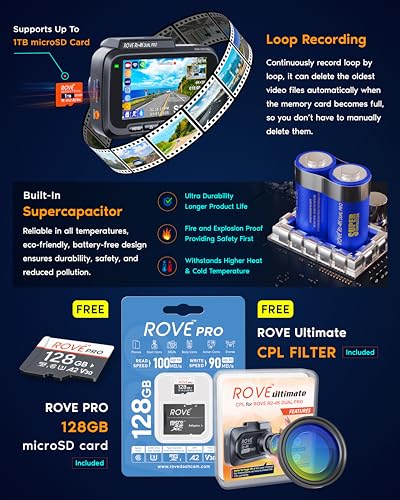
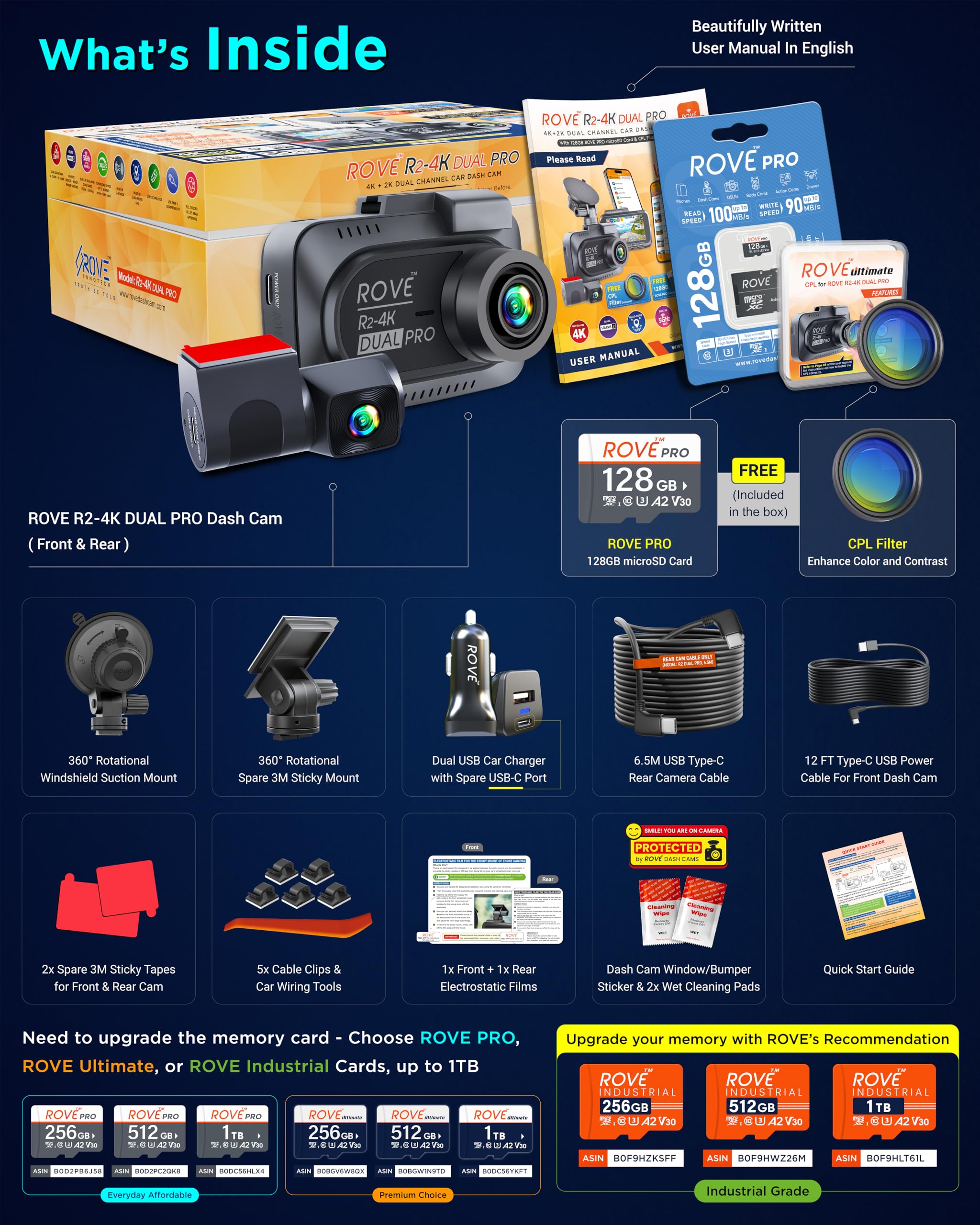
- Included 128GB card and CPL filter improve out-of-box value. The card means you can install and use it immediately, while the CPL filter helps reduce windshield reflections in bright conditions. ROVE includes both in the Dual Pro bundle. (rovedashcam.com)
- 24-hour parking mode is here, but it still needs a separate hardwire kit. That means the headline feature is real, but not fully included. Both ROVE’s product page and hands-on reviews note that constant power hardware is required. (techradar.com)
Specs that actually matter
A dash cam spec sheet gets noisy fast, so here is the useful translation:
| Spec | What it means in real use |
|---|---|
| 4K front / 2K rear | Better odds of capturing usable detail from both directions, not just the front. The rear camera matters more than many buyers expect. |
| STARVIS 2 front and rear sensors | More important than raw resolution for night driving, tunnels, headlights, and rainy scenes. |
| 150° front / 140° rear | Wide enough to cover adjacent lanes, but not so wide that everything becomes overly distorted. (techradar.com) |
| 3-inch IPS screen | Easier setup and aiming than app-only models, though it makes the body less stealthy. (techradar.com) |
| Wi‑Fi 6 | Faster clip transfers if your phone supports it; mainly a convenience gain. (rovedashcam.com) |
| Up to 1TB microSD support | Useful for long retention, especially with higher-bitrate dual recording. (techradar.com) |
| GPS with multiple satellite systems | Better route and speed logging, which matters if you want evidence with location context. (rovedashcam.com) |
| Parking mode requires hardwire kit | Extra install cost and effort if parked protection is one of your reasons for buying. (techradar.com) |
Real-world strengths
1. The rear camera is meaningfully better than bargain dual cams
A lot of cheaper front-and-rear dash cams sell the idea of “dual protection” but then pair a respectable front camera with a soft, low-detail rear unit. The Dual Pro’s 1440p rear camera and STARVIS 2 sensor are the strongest argument for paying more here, because rear-end incidents and parking damage are exactly where a weak rear module becomes frustrating. ROVE’s own current comparison page clearly distinguishes the Dual Pro from the standard Dual on rear resolution and wireless speed. (rovedashcam.com)
2. It looks like a convenience-focused bundle, not a stripped kit
TechRadar’s review called out the included accessories and overall value angle, and ROVE includes the card, CPL filter, mounts, wiring tools, charger, and cable management extras in the box. That matters because some rival packages look cheaper until you add memory, filter, and install accessories. (techradar.com)
3. Setup appears straightforward
That has been a consistent theme with ROVE products. Tom’s Guide found the non-Pro Dual very easy to set up, and TechRadar similarly described the Dual Pro installation and day-to-day use as straightforward. If you are buying your first dash cam, ease of setup is not trivial; complicated cameras often end up misaligned, incorrectly configured, or never fully installed. (tomsguide.com)
4. The suction mount is useful for multi-car use
This will not matter to everyone, but it matters a lot to some buyers. TechRadar specifically liked the suction mount because it makes moving the front camera between vehicles easier than adhesive-only designs. If you switch cars often, that is a genuine advantage. (techradar.com)
Where the value case gets weaker
1. You are paying for quality-of-life extras, not just core evidence capture
A cheaper dual dash cam can still record an accident. What you are buying here is better footage, a better rear channel, faster transfers, and a fuller bundle. Those are real upgrades, but they are not mandatory upgrades for every driver.
If you mainly want a camera that proves who hit whom, a lower-tier dual camera can still do the job. The premium here is easiest to justify for people who drive a lot at night, park on the street, or know they will actually review and save clips.
2. Parking mode is not truly complete out of the box
This is one of the common annoyances in dash cams generally. The feature exists, but it requires extra hardware and a more committed install. Tom’s Guide made the same point about the non-Pro R2-4K Dual, and TechRadar notes the Dual Pro also needs constant power hardware for parking mode. So if parked surveillance is the headline reason you are considering this, budget for the added install complexity mentally even if the live price is acceptable. (tomsguide.com)
3. ROVE is strong on specs, but the absolute enthusiast favorites still exist above it
Among enthusiasts, Viofo models come up repeatedly as the step-up alternative, especially if maximum image quality is the priority. Recent Reddit comparison discussions continue to position the Viofo A229 line as the more premium benchmark, while also acknowledging the ROVE’s better value proposition. That does not automatically make Viofo the better buy for everyone; it means the ROVE sits in the space where buyers want most of the premium experience without paying top-tier money. (reddit.com)
How it stacks up against common alternatives
| Model | Where it wins | Where ROVE wins | Best for |
|---|---|---|---|
| ROVE R2-4K Dual (non-Pro) | Cheaper path to front/rear coverage; still easy to set up. Tom’s Guide found daytime video solid, but night footage weaker. (tomsguide.com) | Better rear resolution, dual STARVIS 2 setup, faster Wi‑Fi, more premium overall bundle. (rovedashcam.com) | Buyers deciding whether improved night and rear quality are worth paying extra. |
| 70mai A810 | Strong reputation for value; TechRadar called it “incredible bang for buck.” (techradar.com) | More complete accessory bundle and, based on the current ROVE package, fewer immediate add-ons needed. (rovedashcam.com) | Value-first shoppers who still want a well-regarded step above generic brands. |
| Viofo A229 series | Better enthusiast reputation and often treated as the image-quality benchmark in forum discussions. (reddit.com) | Lower barrier to a premium-ish dual setup and stronger bundle value. | Drivers willing to spend more for top-tier reputation versus drivers who want most of the benefit for less. |
What you give up by not buying cheaper
If you choose the R2-4K Dual Pro over a less expensive dual cam, you are spending more for four things:
- Night performance headroom
- A sharper rear camera
- A better accessory bundle
- Less friction when moving footage to your phone
If those do not matter to you, the premium is not justified.
That is the core buying decision. A lot of dash cams sound impressive in listings, but most buyers only truly notice three things after installation: whether the footage is usable at night, whether the app is annoying, and whether the rear camera is good enough to matter. The ROVE appears to improve all three versus typical lower-cost options, which is why it has a real case rather than just a spec-sheet case. TechRadar gave the Dual Pro a favorable verdict for value, while Tom’s Guide was noticeably cooler on the older non-Pro Dual because of weaker night performance. That gap is exactly why the Pro exists. (techradar.com)
Who should buy it
Buy the ROVE R2-4K Dual Pro if:
- You want front and rear coverage that feels meaningfully upgraded, not merely included.
- You do a lot of night driving or regularly deal with glare, tunnels, and bad weather.
- You value a complete bundle and do not want to immediately shop for a memory card and CPL filter.
- You will actually use app transfers, making Wi‑Fi 6 a real quality-of-life benefit.
Skip it and buy cheaper if:
- You only want a basic incident record.
- Your driving is mostly daytime commuting.
- You do not care much about rear-camera quality.
- You are willing to accept more compromises to keep spend down.
Verdict: is it worth it?
Yes, for the typical buyer who already knows they want a dual dash cam and is choosing between “cheap and good enough” versus “better and easier to live with.”
The ROVE R2-4K Dual Pro does not look like the absolute best choice for every perfectionist, and it is not the cheapest route to protection. What it does look like is a well-judged middle path: better sensors, a more useful rear camera, fast transfers, and a bundle that saves you from nickel-and-dime add-ons. Verified reviews and product comparisons place it above the bargain tier and below the enthusiast-priced ceiling, which is exactly where a lot of sensible buyers should be shopping. (techradar.com)
My take: this is a smart buy if you want stronger evidence quality without moving all the way up to the pricier enthusiast favorites.
Pros and cons
Pros
- Stronger-than-average front and rear spec combo
- Rear camera resolution is a real upgrade over many cheaper bundles
- Included 128GB card and CPL filter improve actual value
- Straightforward setup and practical physical controls
- Faster wireless transfer is useful if you save clips often
Cons
- Parking mode still needs a separate hardwire kit
- Bigger body and screen are less discreet than tiny minimalist cams
- Premium over cheaper dual cams is only worth it if you care about footage quality
- Enthusiast buyers may still prefer stepping up to a Viofo-class option